Important people in Black American history include abolitionists Frederick Douglass, Harriet Tubman, and Sojourner Truth, journalist Ida B. Wells, scholar W.E.B. Du Bois, educator Booker T. Washington, scientist George Washington Carver, banker Maggie Lena Walker, historian Carter G. Woodson, educator Mary McLeod Bethune, Gen. Daniel "Chappie" James Jr., Justice Thurgood Marshall, Rosa Parks, Martin Luther King Jr., Malcolm X, Fannie Lou Hamer, John Lewis, poets Langston Hughes and Maya Angelou, mathematician Katherine Johnson, baseball legend Hank Aaron, and Coretta Scott King.
This list starts with twenty-four people, arranged by era, with sections on Tuskegee, Alabama, and on sports. It will grow, and each person will get a full biography page. Every entry links to an official or institutional source.
Slavery and abolition
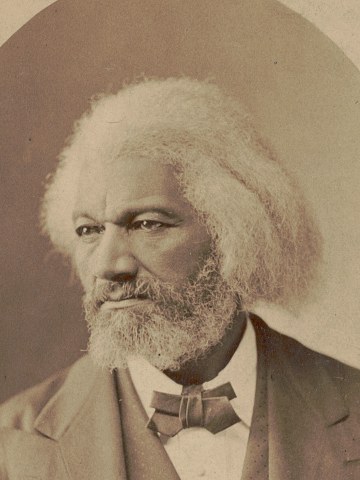
Frederick Douglass
Douglass was born enslaved in Talbot County, Maryland, in 1818, escaped as a young man, and became one of the country's leading abolitionists. His wife Anna Murray Douglass helped him escape. He spent his last seventeen years at Cedar Hill in Washington, D.C., now the Frederick Douglass National Historic Site (National Park Service; Library of Congress).
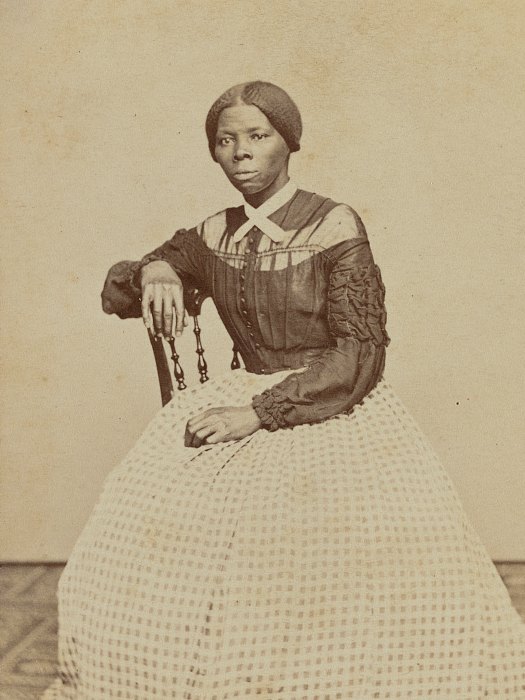
Harriet Tubman
Tubman escaped slavery at twenty-seven and returned to lead dozens of people to freedom on the Underground Railroad. In 1859 she moved her family to Auburn, New York, where she worked for human rights until her death in 1913 (National Park Service).
Sojourner Truth
Truth was born Isabella Baumfree around 1797 in Ulster County, New York, and spent her early life enslaved. She escaped in 1826 and won her legal freedom in 1827. In 1843 she took the name Sojourner Truth and began traveling as a speaker against slavery and for women's rights. Her 1851 speech at the Ohio Women's Rights Convention in Akron became one of the most famous in American history. She died in Battle Creek, Michigan, in 1883 (National Park Service).
Reconstruction and its aftermath
Hiram Revels
Revels, born free in Fayetteville, North Carolina, in 1827, was a minister who recruited Black regiments during the Civil War. On February 25, 1870, he took his seat as a senator from Mississippi, the first Black American to serve in the U.S. Senate. He later became president of Alcorn College (U.S. Senate).
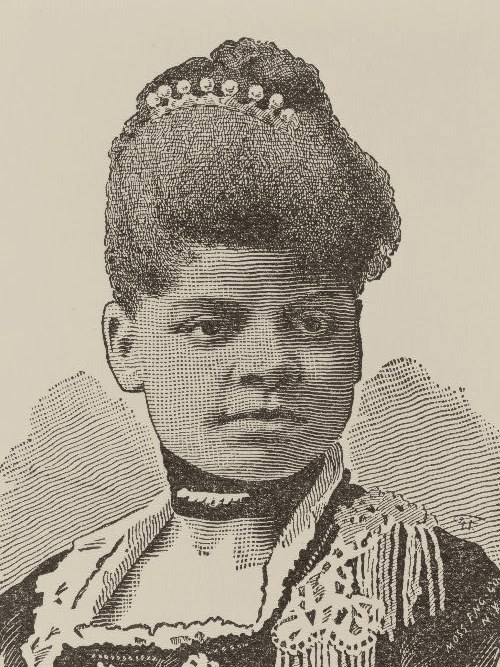
Ida B. Wells
Wells was born into slavery in Holly Springs, Mississippi, in 1862 and became a journalist. After three Black businessmen were lynched in Memphis in 1892, she began investigating and reporting on lynching; a mob destroyed her newspaper office. She is considered a founder of the NAACP. She died in Chicago in 1931 and received a posthumous Pulitzer Prize citation in 2020 (National Park Service).
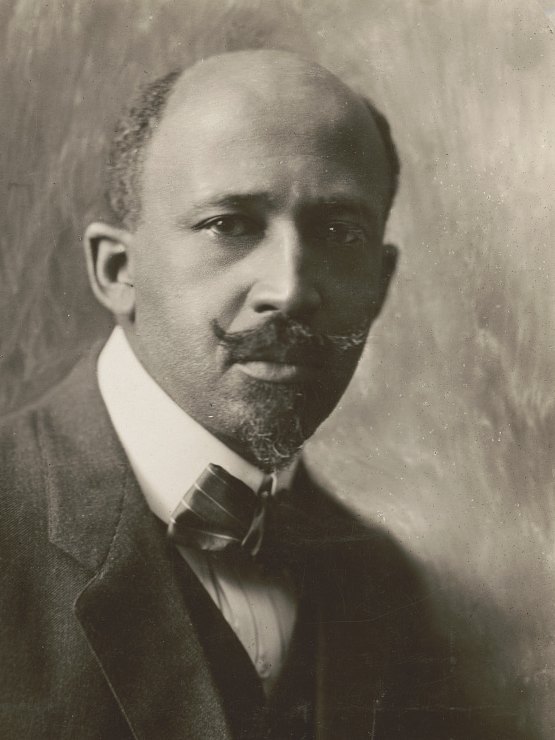
W.E.B. Du Bois
Du Bois was the first Black American to earn a PhD from Harvard and a founding member of the NAACP. His 1903 book The Souls of Black Folk introduced the idea of "double consciousness." He started the NAACP's journal, The Crisis, in 1910. He died in Ghana in 1963 (NAACP).
Building institutions
Maggie Lena Walker
In 1903 Walker founded St. Luke Penny Savings Bank in Richmond, Virginia, becoming the first Black American woman to charter a bank in the United States. She also founded the St. Luke Herald newspaper. Her bank's successor operated until 2009 (National Park Service).
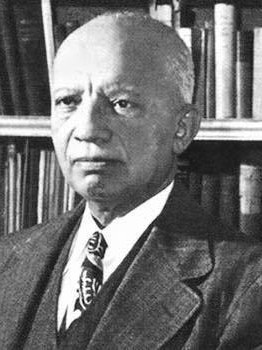
Carter G. Woodson
Woodson, a historian, co-founded the Association for the Study of Negro Life and History in 1915 and launched Negro History Week in 1926. That week became Black History Month (ASALH; National Park Service). See Who Started Black History Month?
Mary McLeod Bethune
Bethune was an educator and adviser to several presidents. In 1936 she became Director of Negro Affairs at the National Youth Administration, making her the first Black American woman to head a federal agency. She helped organize the group of Black federal officials known as the "Black Cabinet" (National Park Service).
Tuskegee, Alabama
One small Alabama town shaped Black education, science, and military history.
Booker T. Washington
Washington was born enslaved on April 5, 1856, on a tobacco farm in Hardy, Virginia. In 1881 he led the founding of a school for Black students in Tuskegee, Alabama, which grew into Tuskegee Institute. He told his story in his autobiography, Up From Slavery, and died in 1915. His birthplace is now the Booker T. Washington National Monument, and his Tuskegee home, The Oaks, is part of Tuskegee Institute National Historic Site (National Park Service; National Park Service).
George Washington Carver
Carver was born in Missouri around 1864, as slavery was ending, and became an agricultural scientist and educator. He joined Tuskegee Institute's agricultural department and stayed for the rest of his life, nearly five decades, promoting crop rotation and sustainable farming. His laboratory building at Tuskegee is now the George Washington Carver Museum. In 1943 his boyhood home near Diamond, Missouri, became the first national monument dedicated to an Black American (National Park Service; National Park Service; The Wilderness Society).
The Tuskegee Airmen
During World War II, more than 16,000 people served in the Tuskegee Airmen program, including pilots, navigators, mechanics, and support staff. Nearly 1,000 Black pilots began their flight training at Moton Field. The 99th and 332nd fighter groups destroyed 262 German aircraft, and their record helped set the stage for the integration of the armed forces in 1948 (National Park Service).
Daniel "Chappie" James Jr.
James was born in Pensacola, Florida, in 1920, the youngest of seventeen children. He graduated from Tuskegee Institute in 1942, trained as a pilot there, and stayed through World War II as a flight instructor. He flew 101 combat missions in Korea and 78 over North Vietnam. In 1975 he became the first Black American four-star general in the U.S. Air Force and took command of NORAD. He retired on February 1, 1978, and died later that month (U.S. Air Force).
Arts, letters, and science
Langston Hughes
Hughes was born in Joplin, Missouri, in 1902 and became a leading poet, writer, and playwright of the Harlem Renaissance, often called the "Poet Laureate of Harlem." His work blended blues and jazz with traditional forms and centered the lives of ordinary Black people. He published The Weary Blues in 1926 and died in New York City in 1967 (State Historical Society of Missouri).
Katherine Johnson
Johnson was born in White Sulphur Springs, West Virginia, in 1918 and joined the Langley laboratory of NASA's predecessor in 1953. Her trajectory calculations supported Alan Shepard's 1961 flight, and before John Glenn's 1962 orbit he asked for her to check the computer's numbers by hand. She received the Presidential Medal of Freedom in 2015 and died in 2020 at 101 (NASA).
Maya Angelou
Angelou was born Marguerite Annie Johnson in St. Louis in 1928 and raised largely in Stamps, Arkansas. Her autobiography I Know Why the Caged Bird Sings made her one of the country's best-known writers. She read "On the Pulse of Morning" at the 1993 presidential inauguration and received the Presidential Medal of Freedom in 2011. She died in 2014. In January 2022 she became the first Black woman to appear on a U.S. quarter (Encyclopedia of Arkansas).
The civil rights era
Thurgood Marshall
Marshall led the NAACP Legal Defense and Educational Fund from 1940 to 1961, served on a federal appeals court, and became U.S. solicitor general. On October 2, 1967, he took the oath as the first Black American justice of the U.S. Supreme Court, where he served until 1991 (Federal Judicial Center; Library of Congress).
Rosa Parks
On December 1, 1955, Parks was arrested in Montgomery, Alabama, for refusing to give up her bus seat to a white passenger. Her arrest led to the Montgomery bus boycott, which lasted 381 days (Library of Congress; King Institute).
Nine months earlier, on March 2, 1955, 15-year-old Claudette Colvin had refused to give up her seat on a Montgomery bus. She later became a plaintiff in Browder v. Gayle, the case that ended the city’s bus segregation (Encyclopedia of Alabama).
Martin Luther King Jr.
King led the Montgomery Improvement Association during the bus boycott and later headed the Southern Christian Leadership Conference. He gave his “I Have a Dream” speech at the March on Washington on August 28, 1963. He was assassinated at the Lorraine Motel in Memphis on April 4, 1968 (King Institute; National Archives; National Civil Rights Museum).
Malcolm X
Malcolm X was born Malcolm Little in Omaha, Nebraska, on May 19, 1925. He joined the Nation of Islam in 1952 and became its most prominent speaker; membership grew from about 400 to at least 10,000. After breaking with the group in 1964, he made a pilgrimage to Mecca and traveled through Africa and the Middle East. He was assassinated at the Audubon Ballroom in New York City on February 21, 1965. His birthplace site in Omaha is listed on the National Register of Historic Places (National Park Service).
Fannie Lou Hamer
Hamer was a Mississippi sharecropper, born in 1917. In 1962, at forty-five, she volunteered to try to register to vote and lost her job for it; she was later brutally beaten for her activism. She helped organize the Mississippi Freedom Democratic Party, which challenged the state's all-white delegation at the 1964 Democratic National Convention. She died in 1977 (National Women's Hall of Fame).
Vivian Malone Jones
Malone was born in Vredenburgh, Alabama, in 1942 and grew up in Mobile, where her parents led voter registration drives. On June 11, 1963, Governor George Wallace stood in the doorway of the University of Alabama's Foster Auditorium to block her and James Hood from registering. President John F. Kennedy federalized the Alabama National Guard, and Wallace stepped aside. In 1965 she became the university's first Black graduate. She went on to work for the Justice Department's civil rights division and the Environmental Protection Agency, and in 1977 became the first woman to direct the Voter Education Project. She died in 2005 (Alabama Women's Hall of Fame; University of Alabama; Encyclopedia of Alabama).
John Lewis
Lewis was born to a sharecropping family in Pike County, Alabama, in 1940. He joined the sit-ins, rode in the 1961 Freedom Rides, chaired the Student Nonviolent Coordinating Committee from 1963 to 1966, and spoke at the March on Washington. In 1965 he helped lead about 600 marchers onto the Edmund Pettus Bridge on Bloody Sunday. He represented Georgia's Fifth District in Congress for more than thirty years and died on July 17, 2020 (New Georgia Encyclopedia).
Coretta Scott King
Born in 1927 in Heiberger, in Perry County, Alabama, Coretta Scott King trained as a singer at the New England Conservatory of Music and used that training to stage Freedom Concerts that raised money for the Southern Christian Leadership Conference. In 1968 she founded the Martin Luther King Jr. Center for Nonviolent Social Change in Atlanta and led it until 1995. She chaired the federal commission that organized the national holiday honoring her husband, first observed in 1986 (Encyclopedia of Alabama).
Sports
Hank Aaron
Aaron was born in Mobile, Alabama, on February 5, 1934. He started out with the Mobile Black Bears, earning $10 a game, and played for the Indianapolis Clowns in the Negro American League before joining the Braves in 1954. On April 8, 1974, after months of racist hate mail and threats, he hit his 715th home run and broke Babe Ruth's record. He finished with 755 home runs and entered the Baseball Hall of Fame in 1982. He received the Presidential Medal of Freedom in 2002 and died in 2021 (Encyclopedia of Alabama; National Baseball Hall of Fame).
Visit their places
Several of these people's homes and workplaces are open to visitors: Cedar Hill in Washington, D.C.; Tuskegee Institute and the Tuskegee Airmen sites in Tuskegee, Alabama; Harriet Tubman National Historical Park in Auburn, New York; Maggie L. Walker's home in Richmond; the Carter G. Woodson Home in Washington; and Martin Luther King Jr. National Historical Park in Atlanta; and the Edmund Pettus Bridge in Selma. See Black History Museums and Historic Places to Visit.
Sources
- Davis, Jennifer. "Anniversary of Thurgood Marshall's Swearing-In to the Supreme Court." In Custodia Legis, Library of Congress, October 2, 2015.
- Federal Judicial Center. "Marshall, Thurgood." Biographical Directory of Article III Federal Judges. Accessed October 17, 2026.
- King Institute. "Browder v. Gayle, 352 U.S. 903." Martin Luther King, Jr. Research and Education Institute, Stanford University. Accessed October 17, 2026.
- Library of Congress. "Frederick Douglass Timeline." Frederick Douglass Papers. Accessed October 17, 2026.
- Library of Congress. "Incarceration at Montgomery City Jail." Rosa Parks: In Her Own Words. Accessed October 17, 2026.
- NAACP. "W.E.B. Du Bois." Accessed October 17, 2026.
- National Archives. "Official Program for the March on Washington (1963)." Milestone Documents.
- National Civil Rights Museum. "About." Accessed October 17, 2026.
- National Park Service. "Frederick Douglass National Historic Site," "Harriet Tubman National Historical Park," "Ida B. Wells," "Maggie L. Walker," "Carter G. Woodson Home," and "Mary McLeod Bethune: The Presidential Advisor." Accessed October 17, 2026.
- Scott, Daryl Michael. "Origins of Black History Month." ASALH. Accessed October 17, 2026.
- Encyclopedia of Alabama. "Coretta Scott King." Accessed October 19, 2026.
- U.S. Senate Historical Office. "Hiram Revels: First African American Senator." February 25, 2020.
- National Park Service. "Booker T. Washington," "Tuskegee Institute National Historic Site," "George Washington Carver National Monument," and "Alabama: Tuskegee Airmen National Historic Sites." Accessed October 18, 2026.
- The Wilderness Society. "How George Washington Carver National Monument Became the First to Honor an African American." July 14, 2016.
- U.S. Air Force. "Tuskegee Airman Sees Success as First AF Four-Star General." February 11, 2012.
- Encyclopedia of Arkansas. "Maya Angelou (1928–2014)." Central Arkansas Library System. Accessed October 18, 2026.
- Moye, J. Todd. "John Lewis (1940–2020)." New Georgia Encyclopedia. Accessed October 18, 2026.
- NASA. "Katherine Johnson Biography." Accessed October 18, 2026.
- National Park Service. "Sojourner Truth" and "Nebraska: Malcolm X House Site, Omaha." Accessed October 18, 2026.
- National Women's Hall of Fame. "Fannie Lou Hamer." Accessed October 18, 2026.
- State Historical Society of Missouri. "Langston Hughes." Historic Missourians. Accessed October 18, 2026.
- Encyclopedia of Alabama. "Henry 'Hank' Aaron." By Steve Townsend. Accessed October 18, 2026.
- National Baseball Hall of Fame. "Hank Aaron." Accessed October 18, 2026.
- Alabama Women's Hall of Fame. "Vivian Malone Jones." Accessed October 18, 2026.
- Encyclopedia of Alabama. "Vivian Malone's First Day of Class." Accessed October 18, 2026.
- University of Alabama. "Gov. George C. Wallace." Foster Auditorium. Accessed October 18, 2026.